




Teaching Part
The partner institution is a key local vocational education provider for the automotive industry and a platform for the implementation of Sino-Thai vocational education cooperation projects, primarily training skilled personnel for the new energy vehicle industry in Thailand. The courses are taught to enrolled students in relevant majors, with tiered curriculum design, gradually exploring practical teaching models adapted to the specific learning conditions in Thailand.
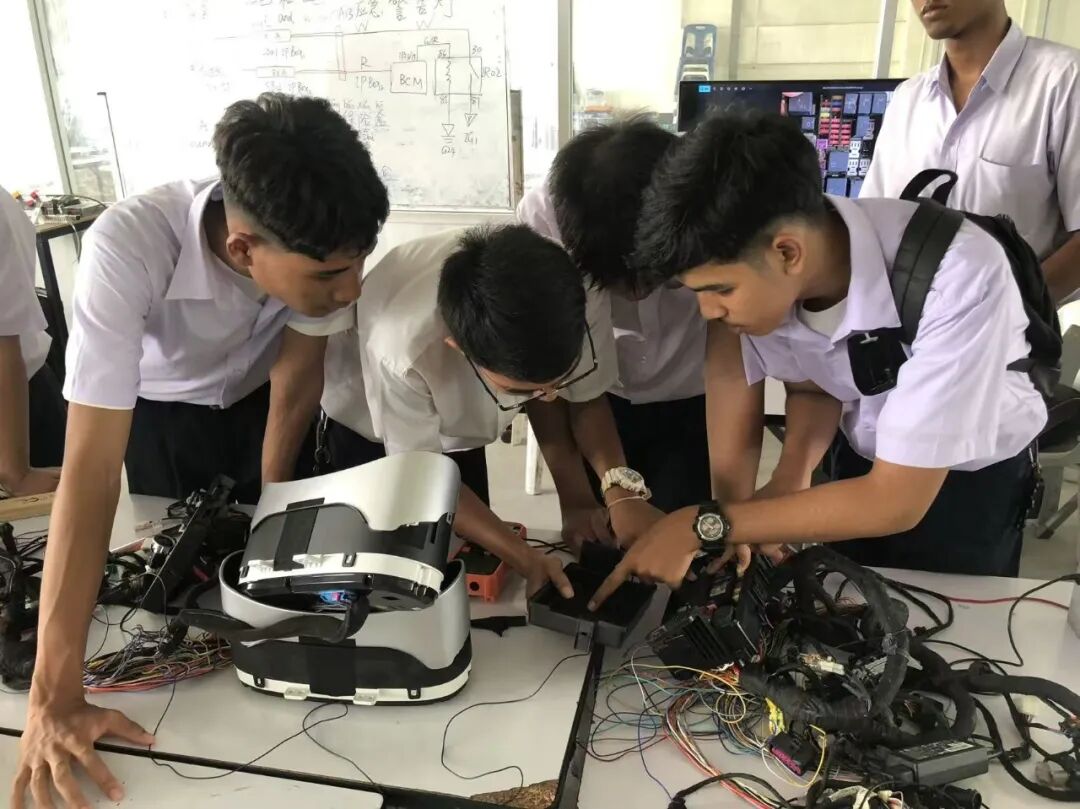
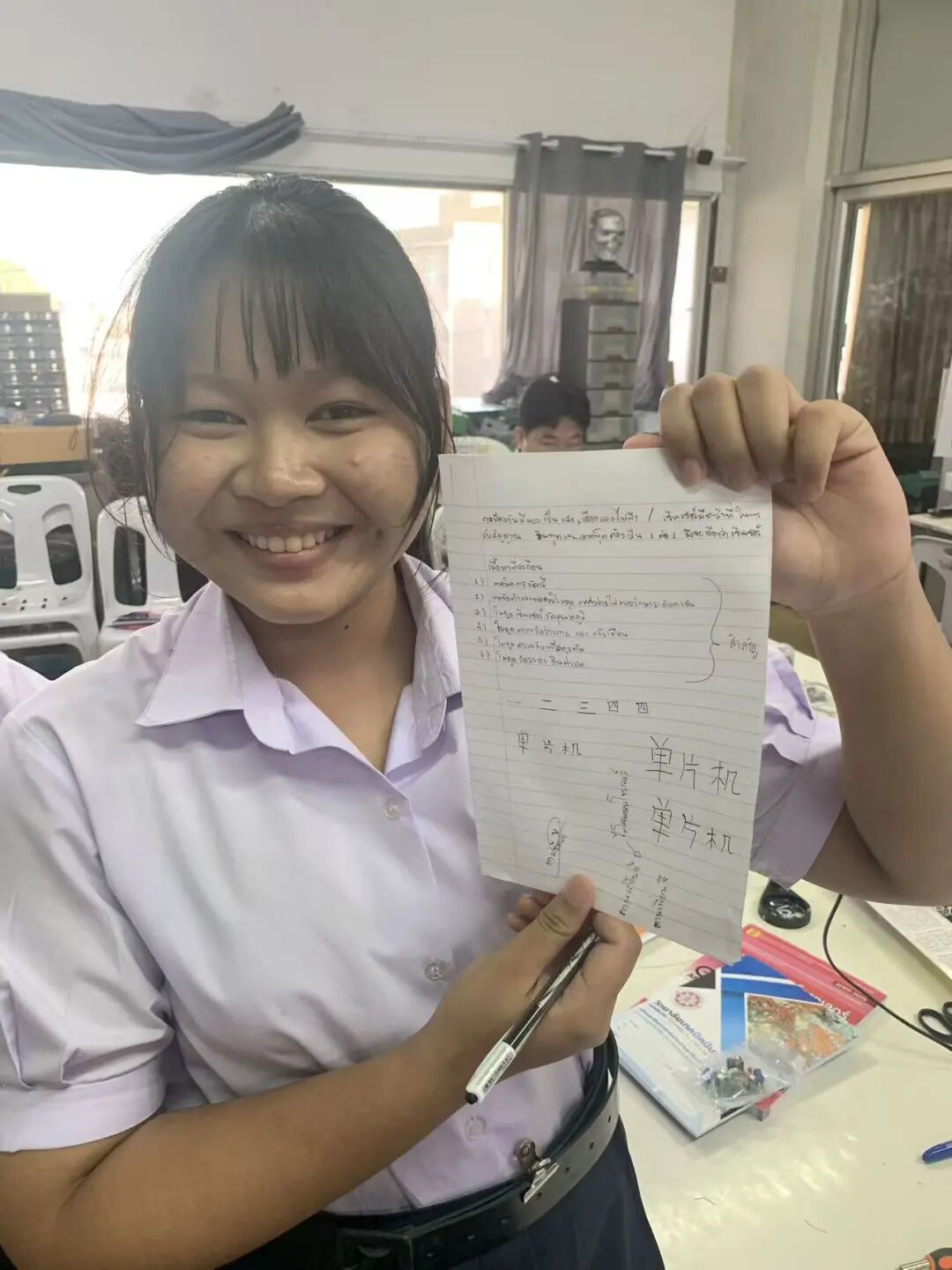
Designed for automotive students, the course focuses on hands-on training, reducing dull theoretical lectures. Classroom instruction utilizes real vehicle disassembly, fault simulation practical training, and model demonstrations to explain the principles of the three core electrical systems of new energy vehicles. Interactive games involving equipment identification simplify complex concepts such as high-voltage batteries, motors, and electronic controls, fully engaging students’ hands-on experience and allowing them to intuitively grasp basic repair procedures.
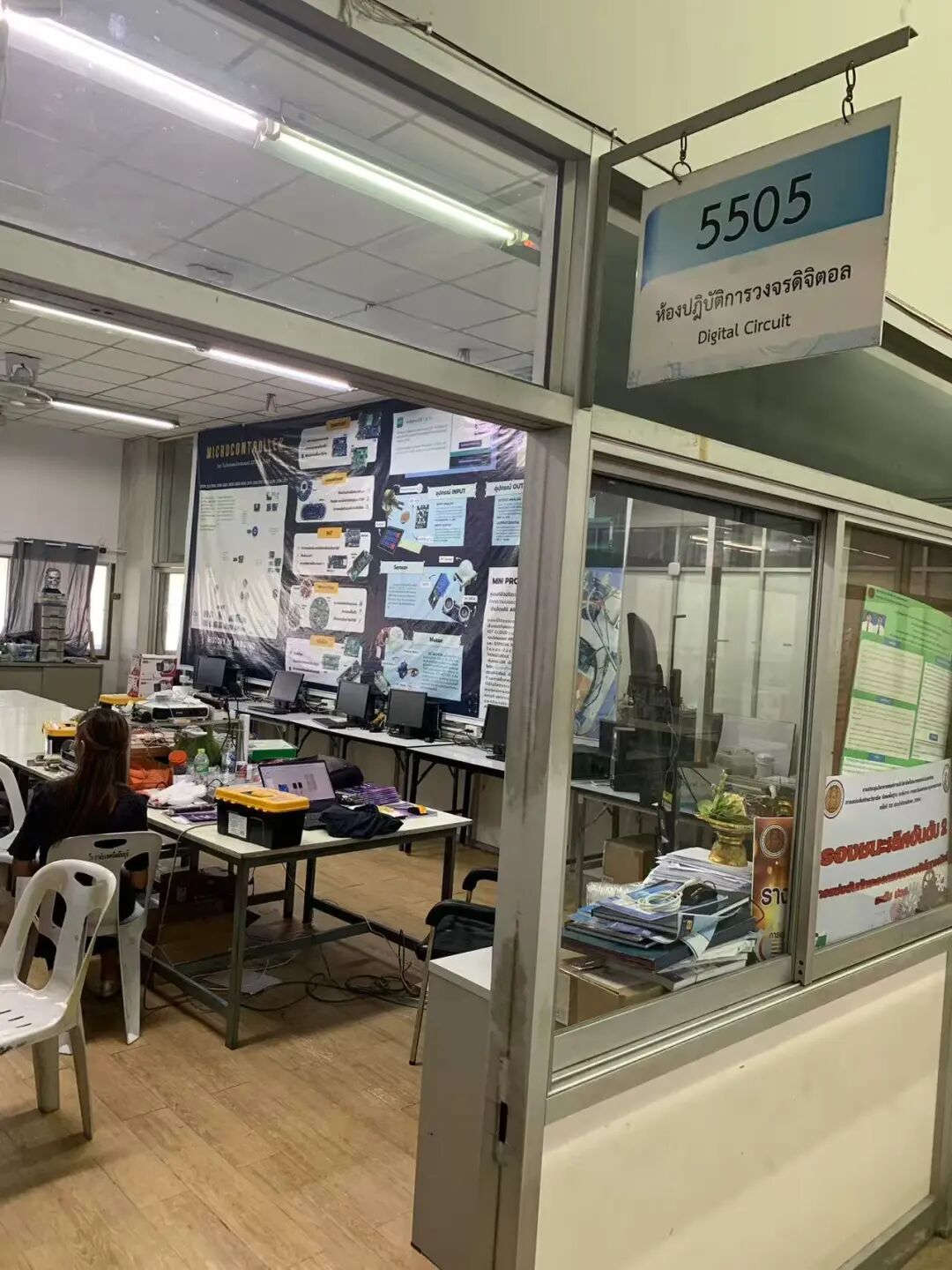
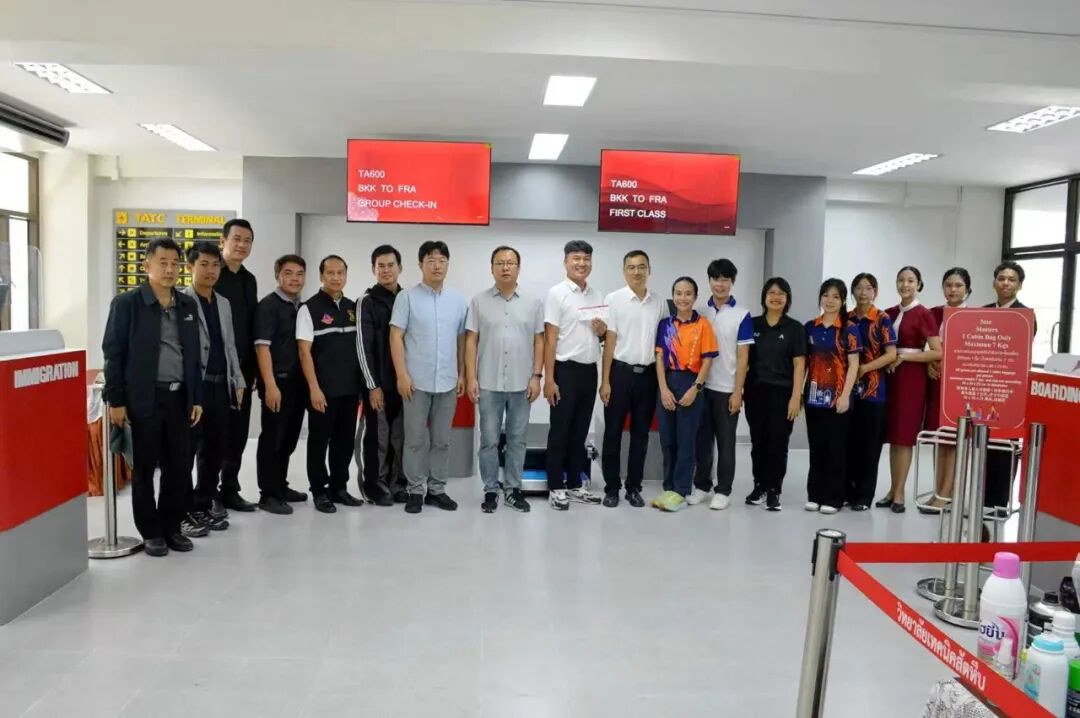
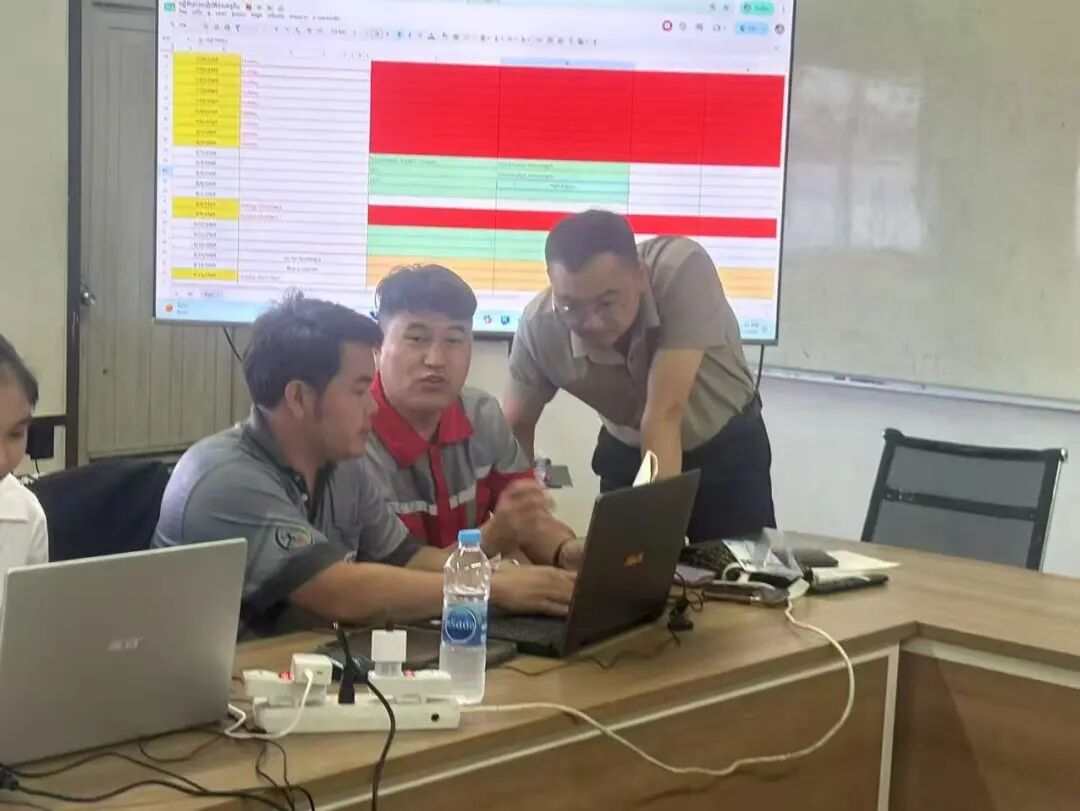
By combining localized teaching cases based on new energy vehicle models sold in the Thai market and sharing mature domestic practical training solutions, this training aims to help participating teachers optimize their school’s new energy vehicle professional courses and solve pain points in classroom practical teaching.
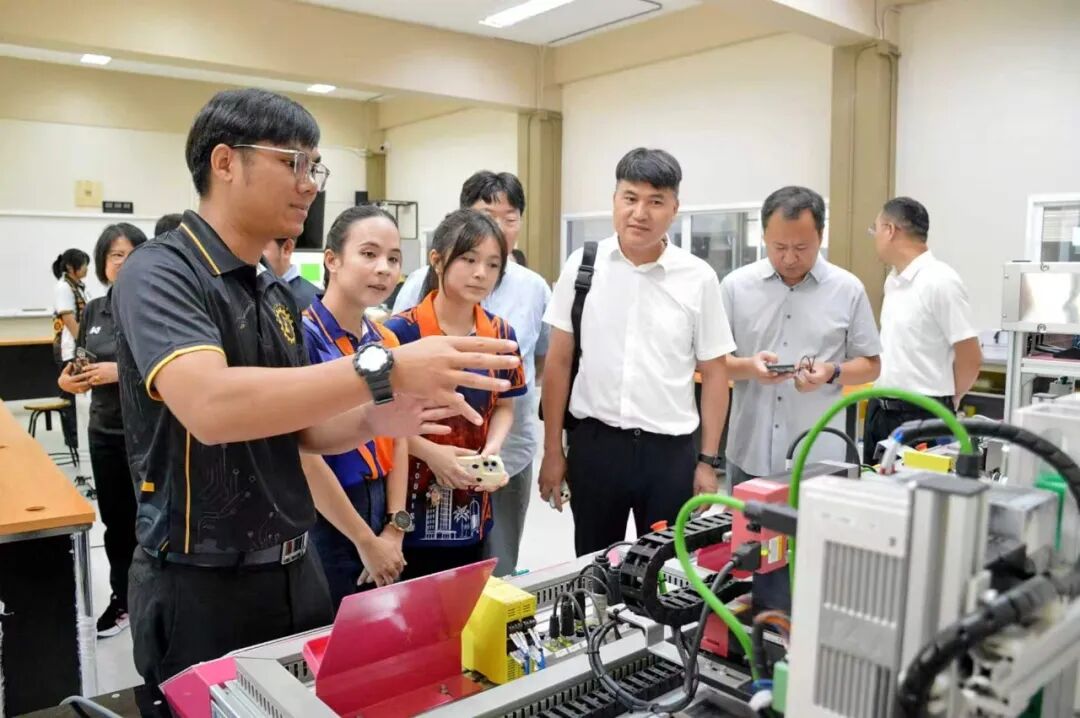
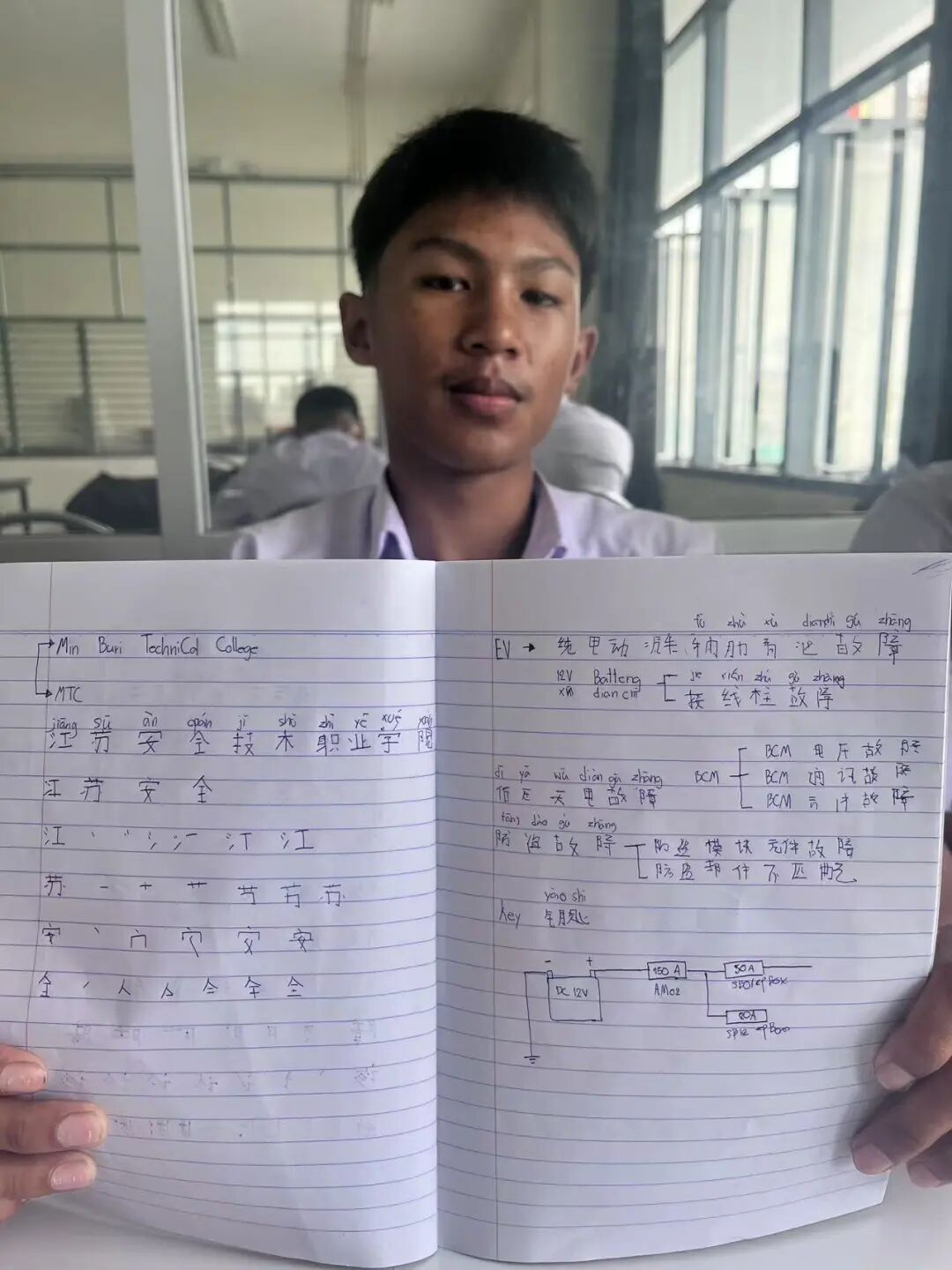
Technical Exchange Activities
Leveraging the China-Thailand industry-education integration exchange platform, regular technical exchange activities on New Energy Vehicles were conducted to build a bridge for mutual understanding of automotive technologies between the two countries.
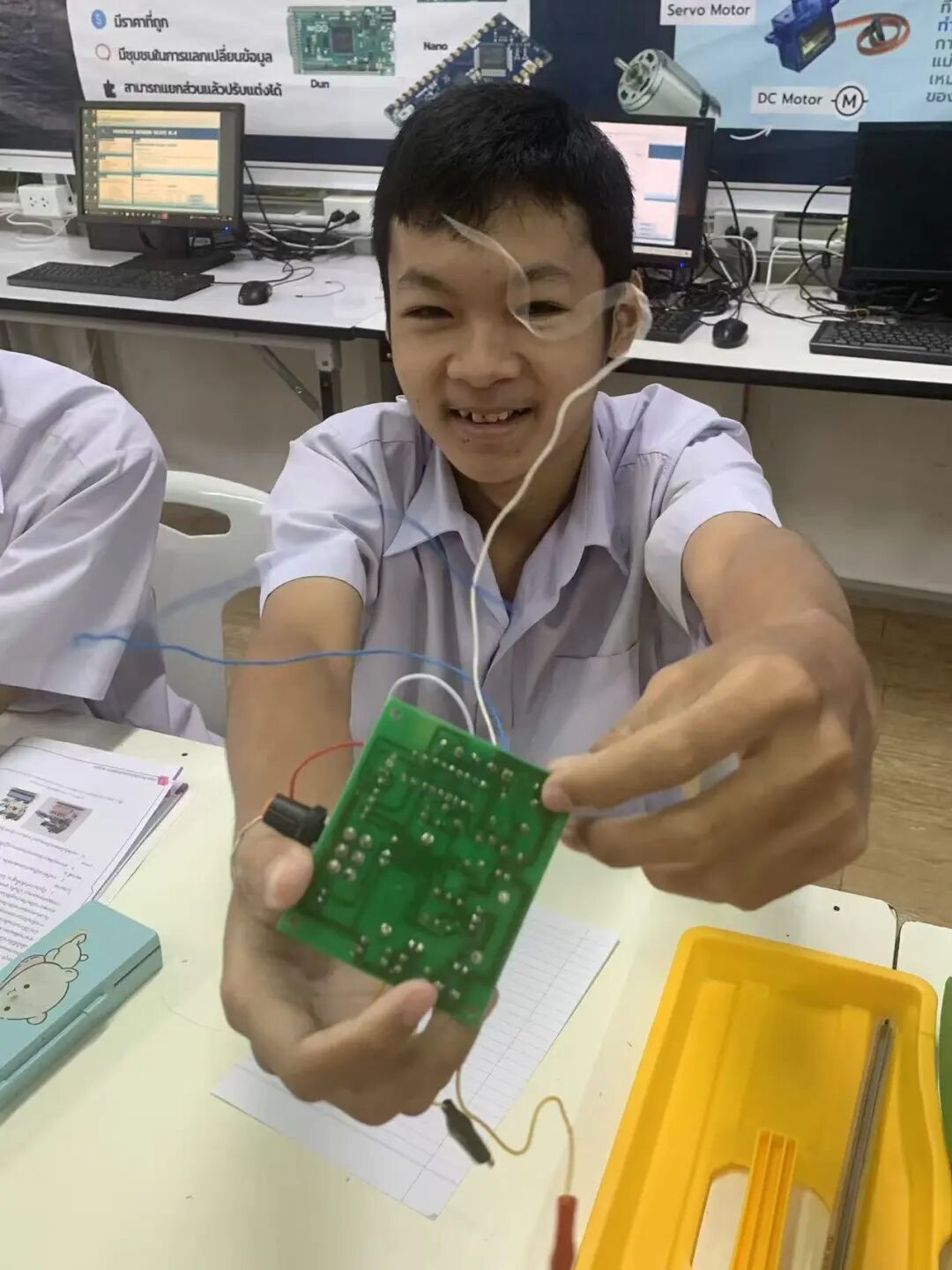
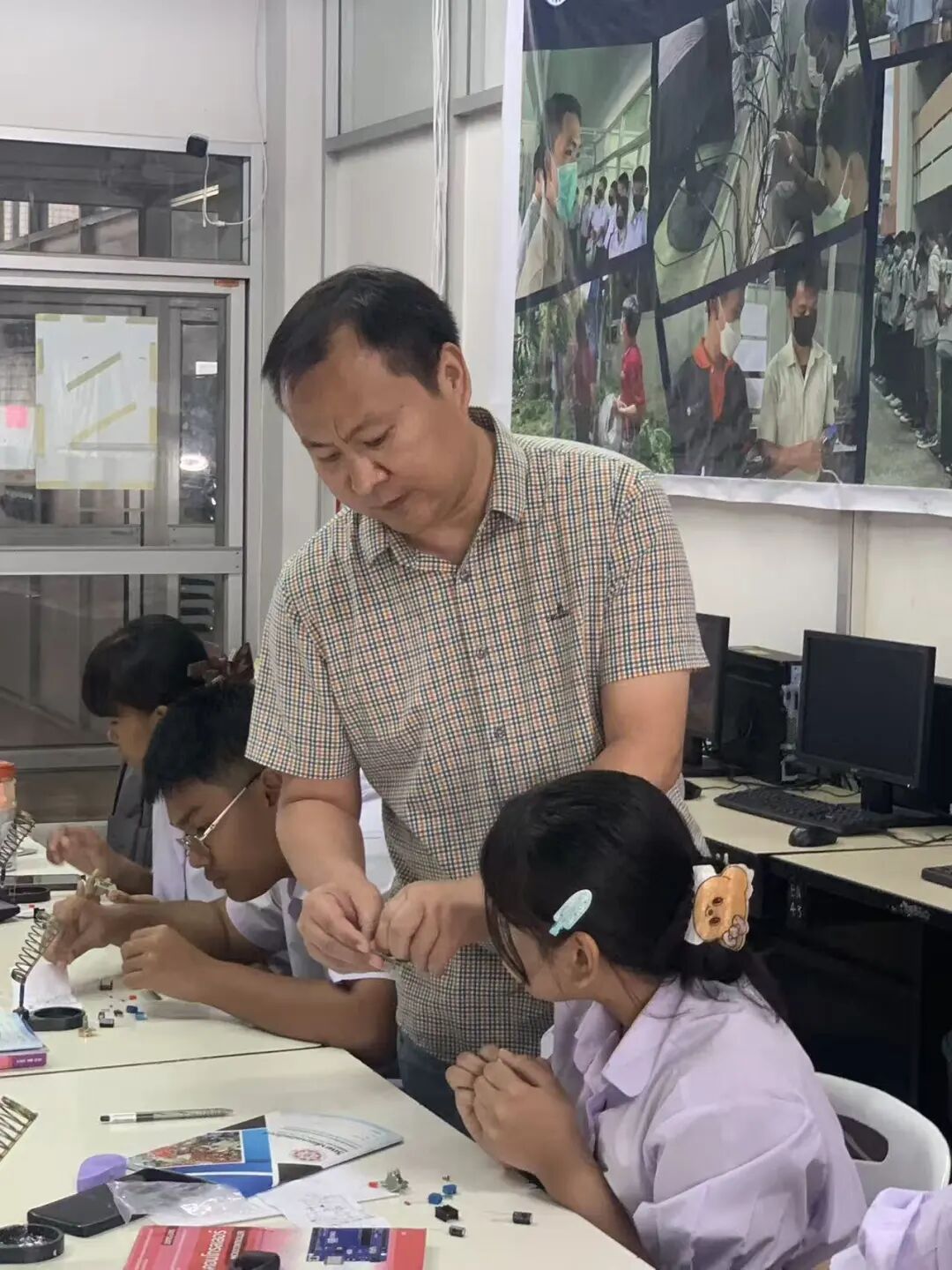
During the seminar, vocational education practitioners from both China and Thailand held subject-specific discussions on the development of new energy vehicle majors. Our side shared China’s complete model for new energy vehicle major curriculum design, practical training base construction, and school-enterprise collaborative education; Thai teachers, based on the current situation of local industries, raised practical teaching challenges such as a shortage of practical training equipment, insufficient teaching cases of local models, and high-pressure training safety management. Both sides held group discussions, exchanged solutions, and jointly developed a down-to-earth practical training teaching plan suitable for Thai institutions, forming feasible curriculum optimization suggestions.
During the visit to local enterprises, Chinese teachers joined the China-Thailand vocational education delegation to visit local new energy vehicle manufacturers, auto repair and maintenance shops, and charging station operation and maintenance companies. We visited vehicle assembly workshops, power battery testing stations, and after-sales repair production lines. Company technical leaders provided on-site explanations of mainstream new energy vehicle models in the Thai market, local repair technical standards, and the challenges of charging facility operation and maintenance.
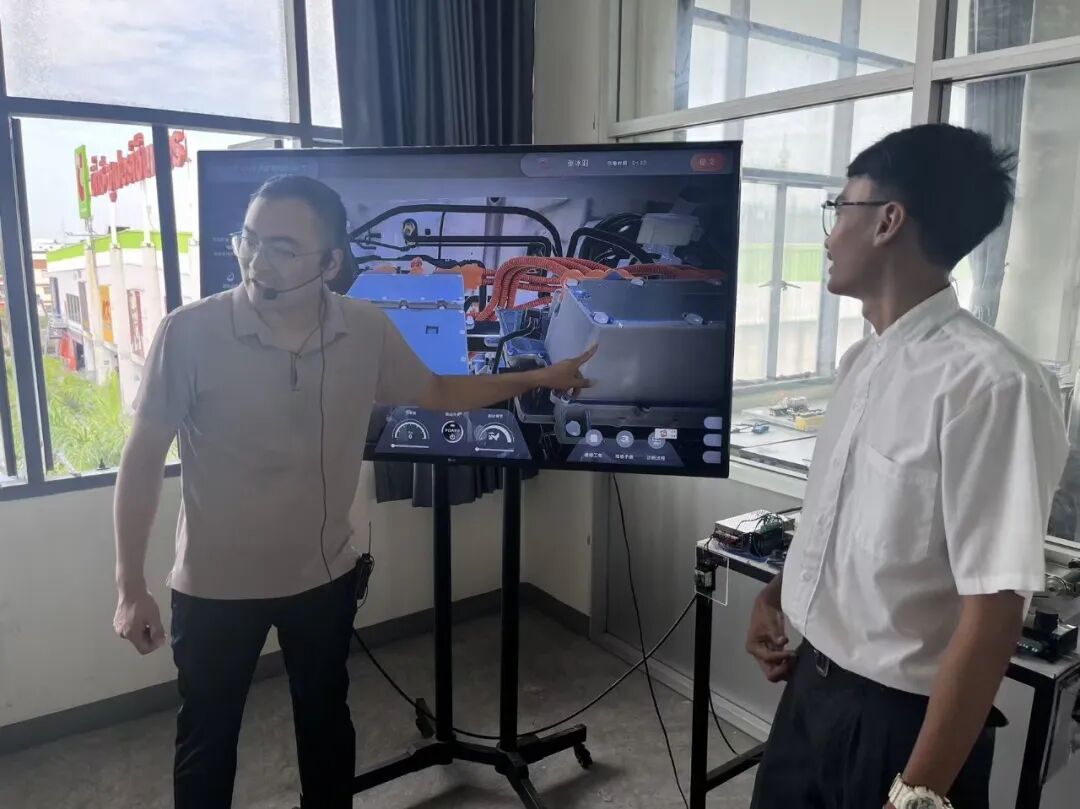
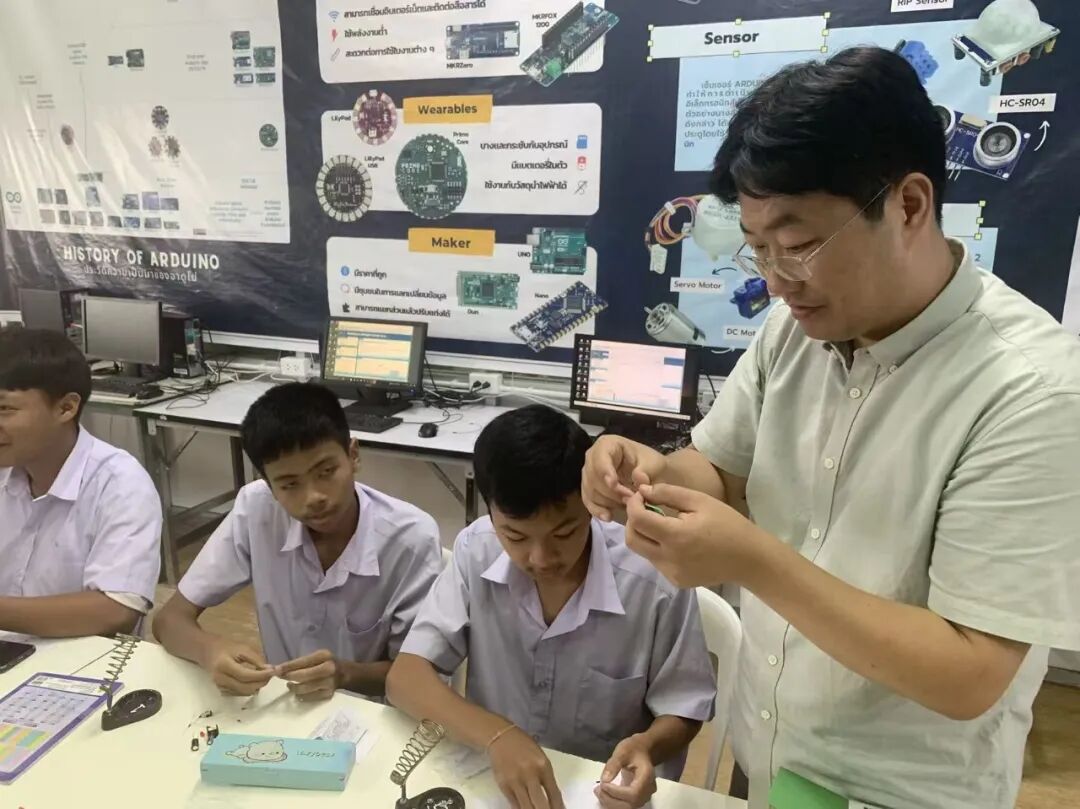
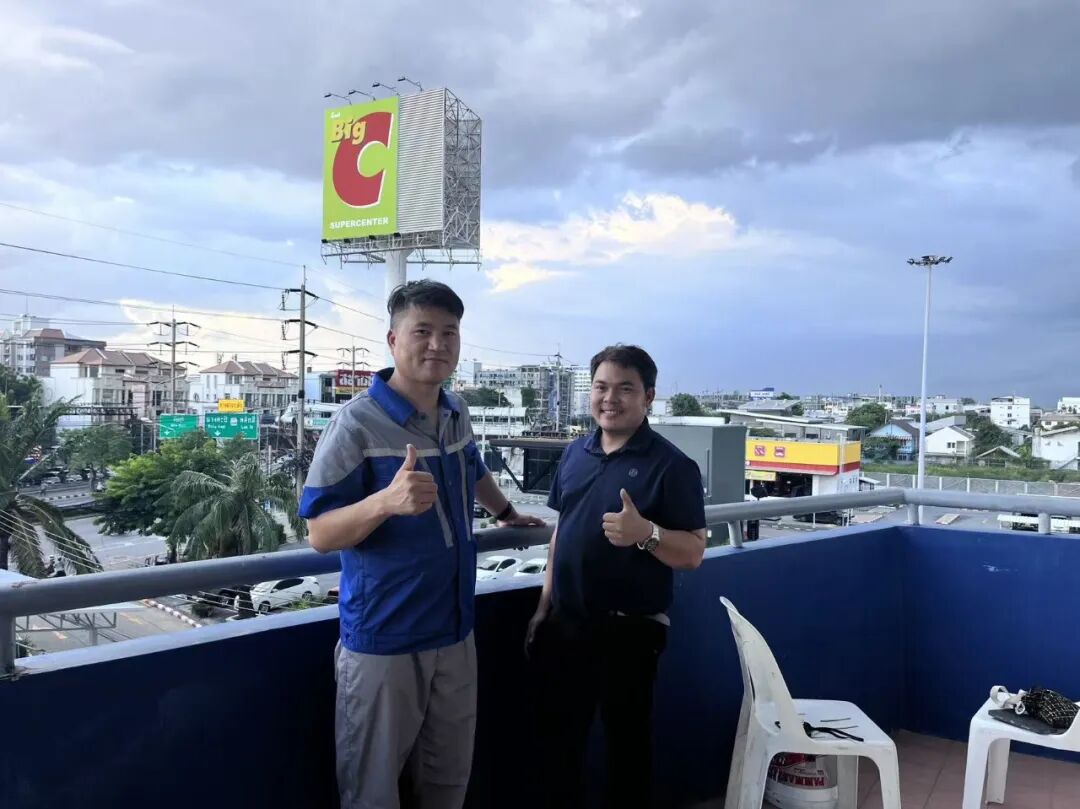
By leveraging domestic experience in school-enterprise cooperation, we exchanged ideas with key technical personnel from these companies on talents development and alignment models, and documented the actual skill requirements of local industry positions. This provided valuable firsthand material for adjusting classroom training content and establishing industry-university internship channels.
We regularly offer a series of thematic technical lectures on New Energy Vehicles, covering topics such as power battery maintenance, vehicle electronic control system repair, charging station installation and maintenance, and hybrid vehicle fault repair. We also provide practical training teaching tools and standardized operation manuals to continuously strengthen the professional and technical foundation of Thai teachers and students.
Extracurricular Activities and Lifestyle
Chinese teachers deeply experienced Thai culture and customs during their free time, savoring distinctive Thai cuisine. They were invited to participate in traditional festivals, industry technical exchange meetings, and Sino-Thai educational exchange activities, fostering closer connections through offline interactions.
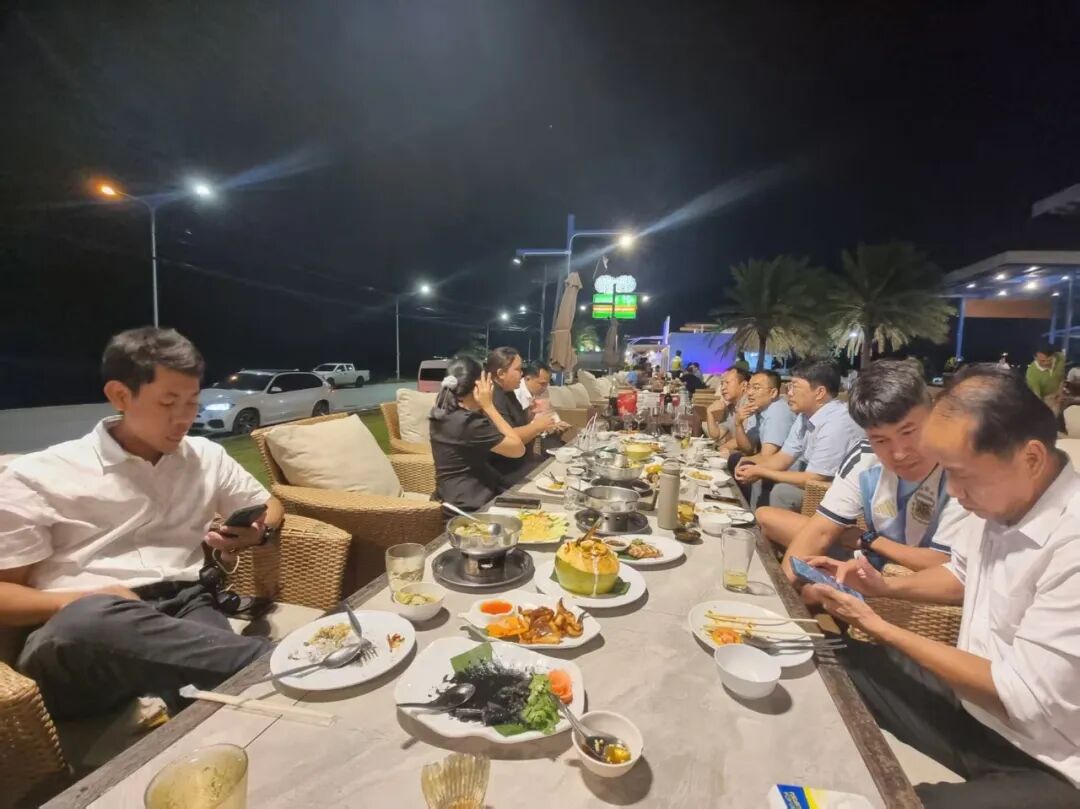
During their free time, they visited local car markets and repair shops to research the actual needs of Thailand’s automotive industry’s transition to new energy vehicles, adjusting the focus of subsequent practical training based on the current state of the local industry. They also visited local towns and cities, experiencing the unique cultural landscape of Southeast Asia.
The time spent on conducting vocational education in New Energy Vehicles in Thailand was fulfilling and valuable. The local teachers and students showed great enthusiasm for learning, treated us with sincerity, and were exceptionally dedicated to practical training. Moving forward, we will continue to optimize the practical training teaching content to better meet the needs of the Thai industry, serve as a bridge for Sino-Thai automotive technology exchange, export mature domestic experience in new energy vocational education, support the cultivation of new energy technology talents in Thailand, and further deepen the integration of industry and education in vocational education between two countries.